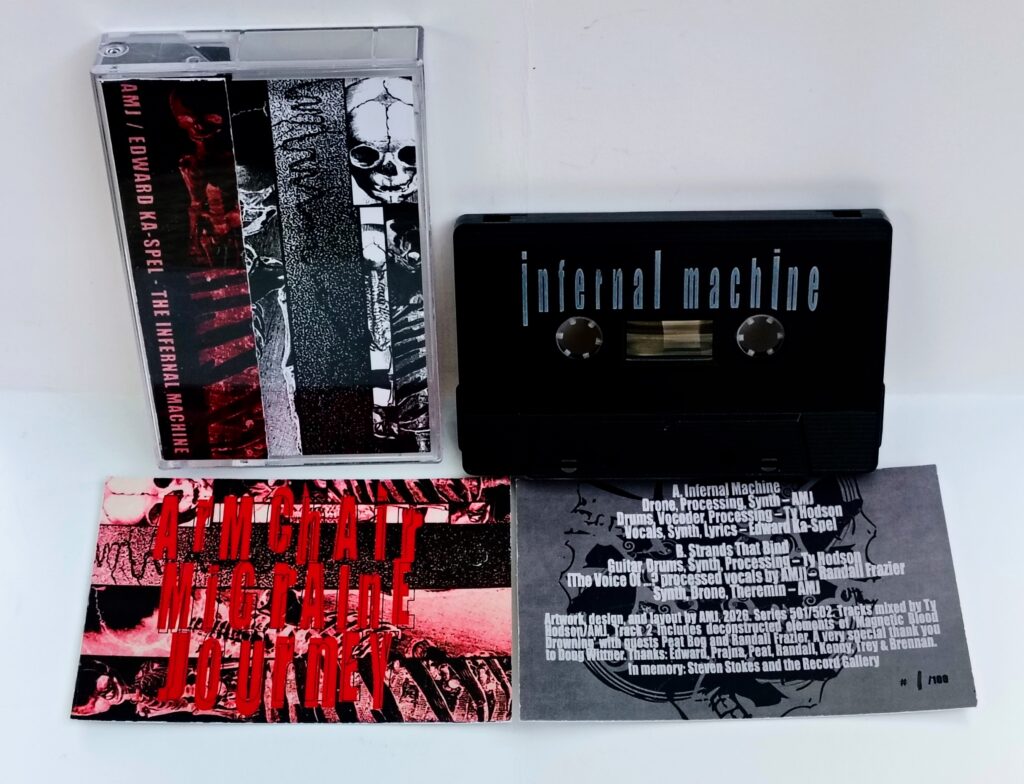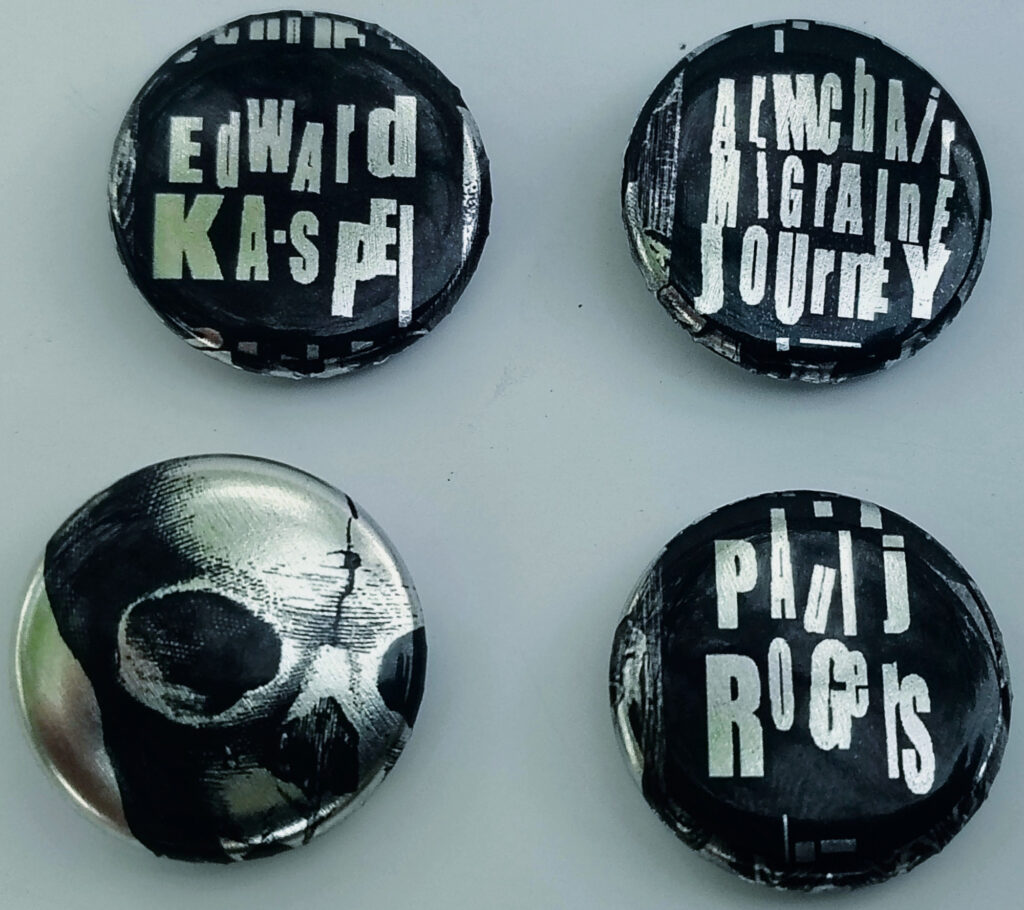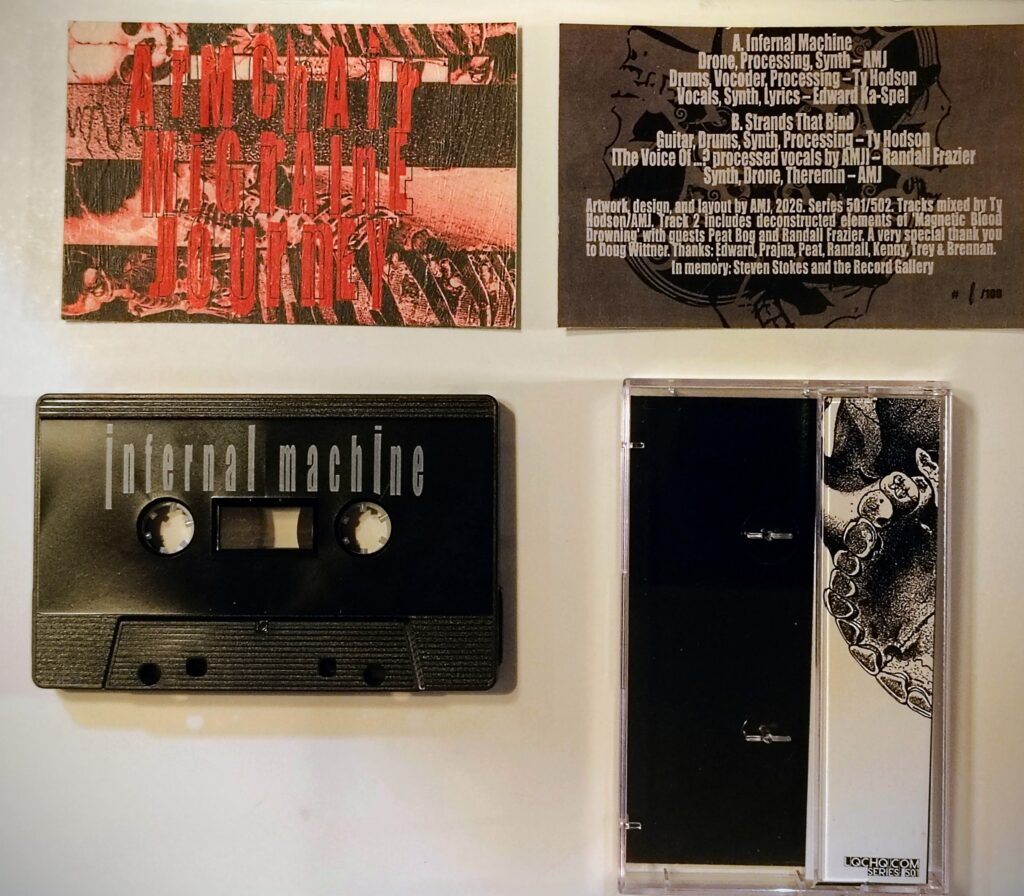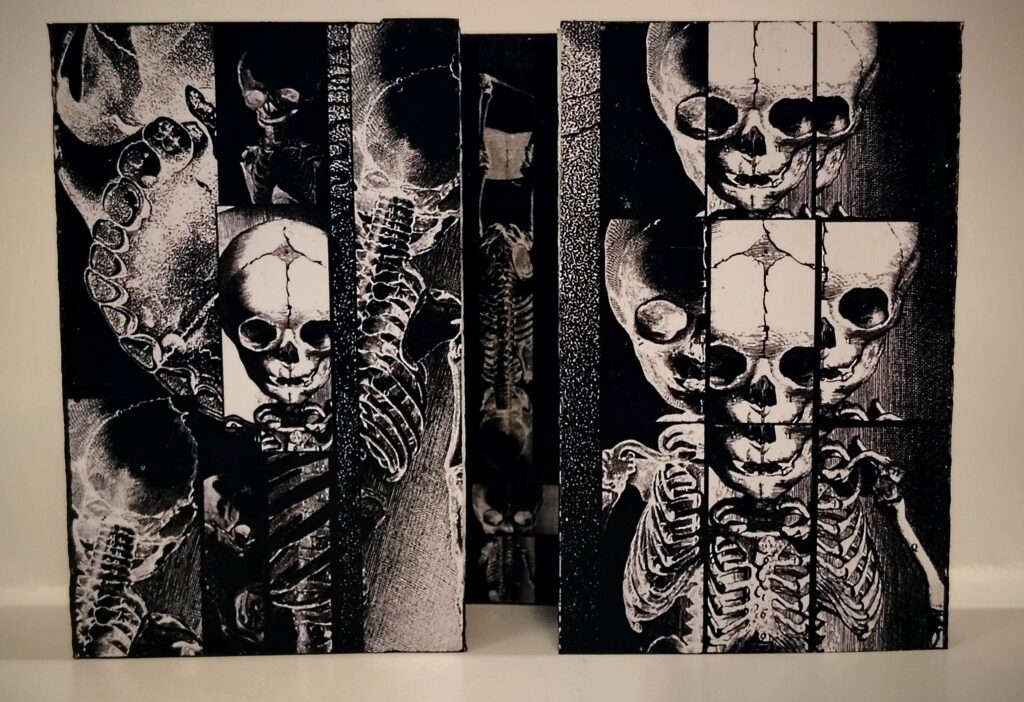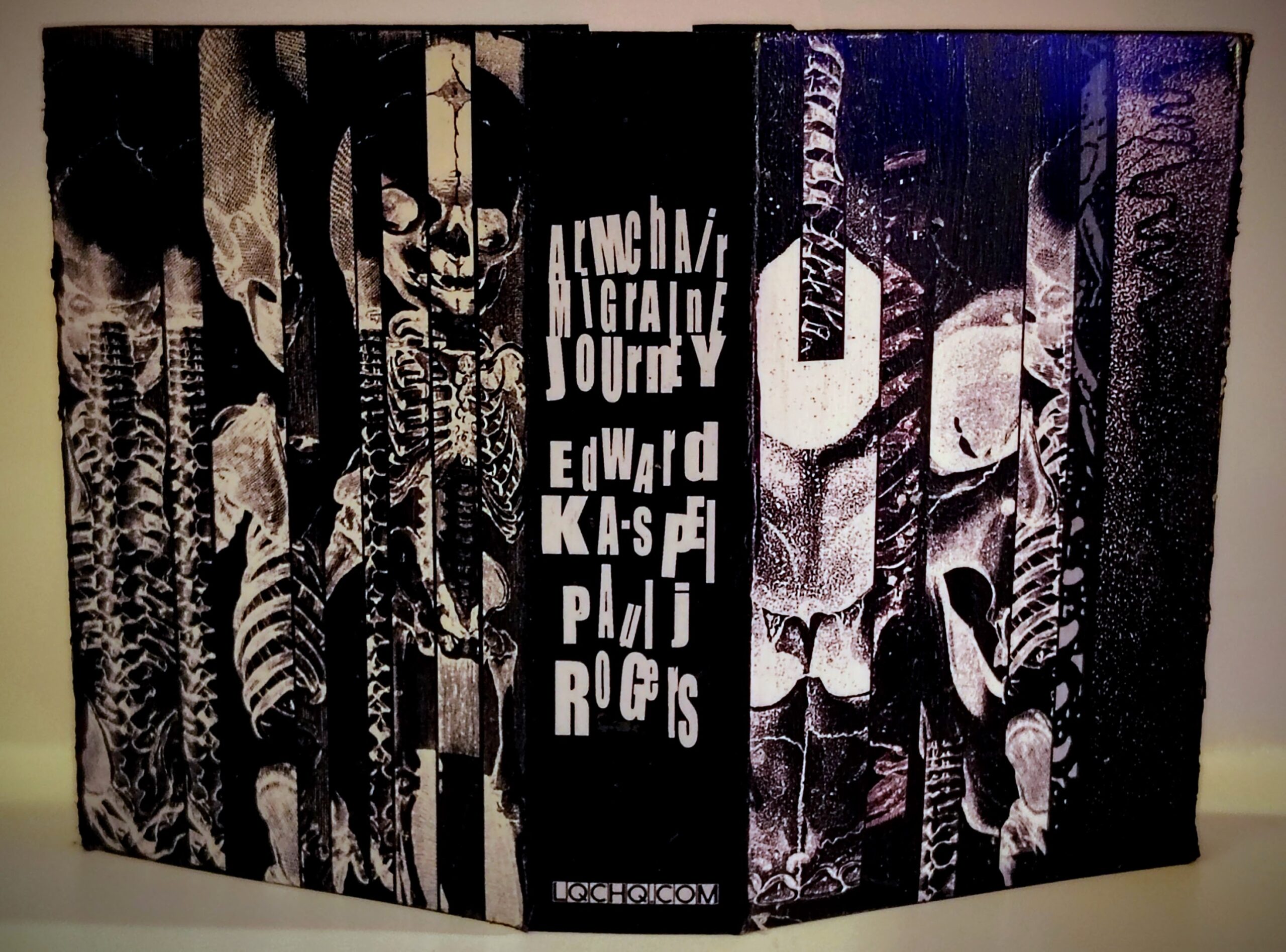
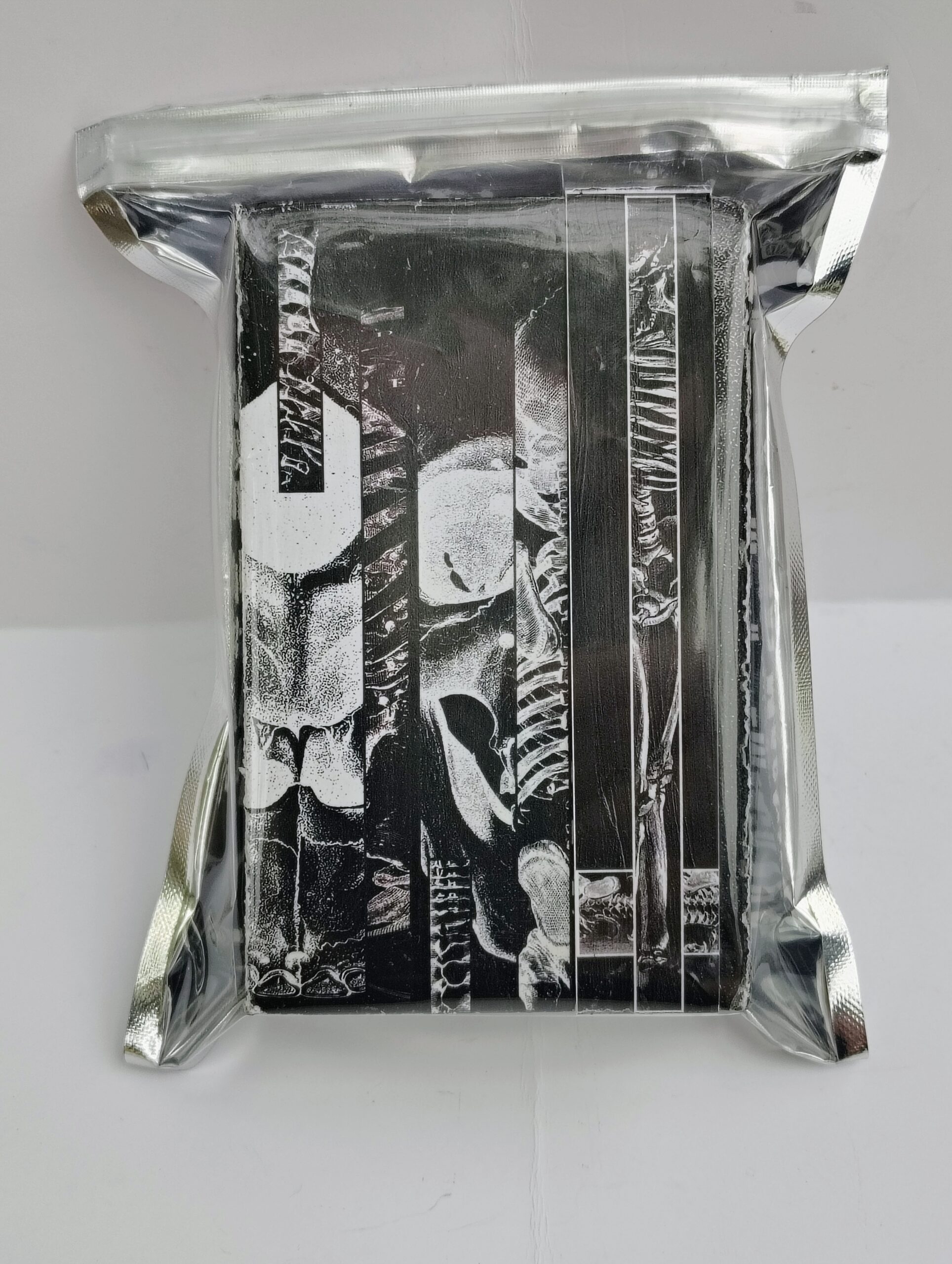
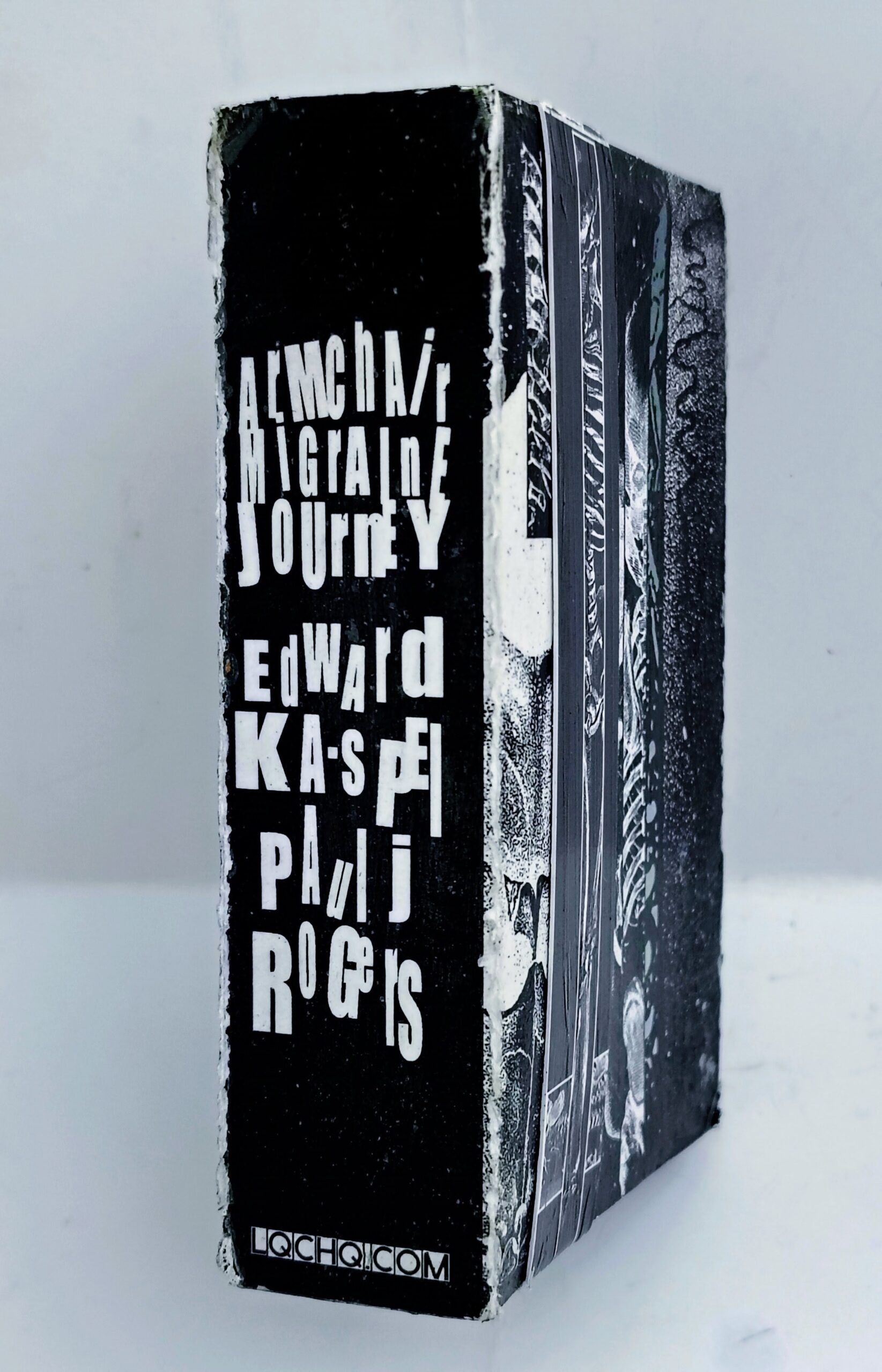
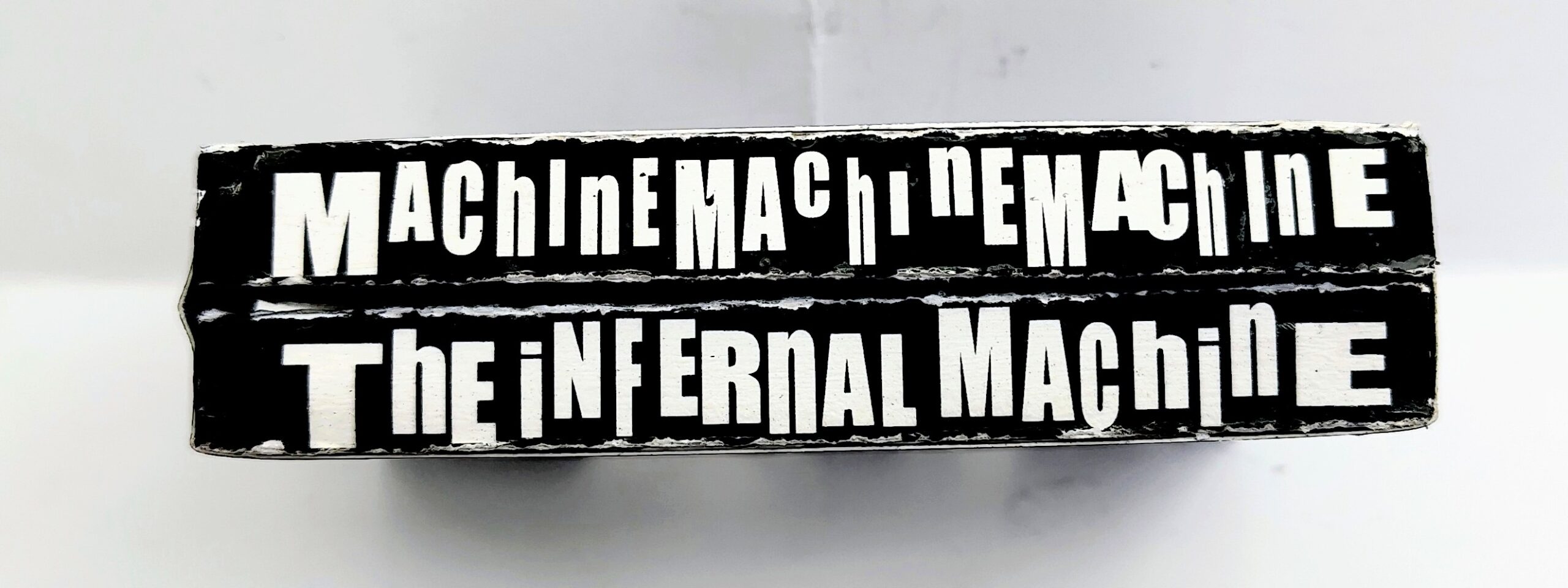
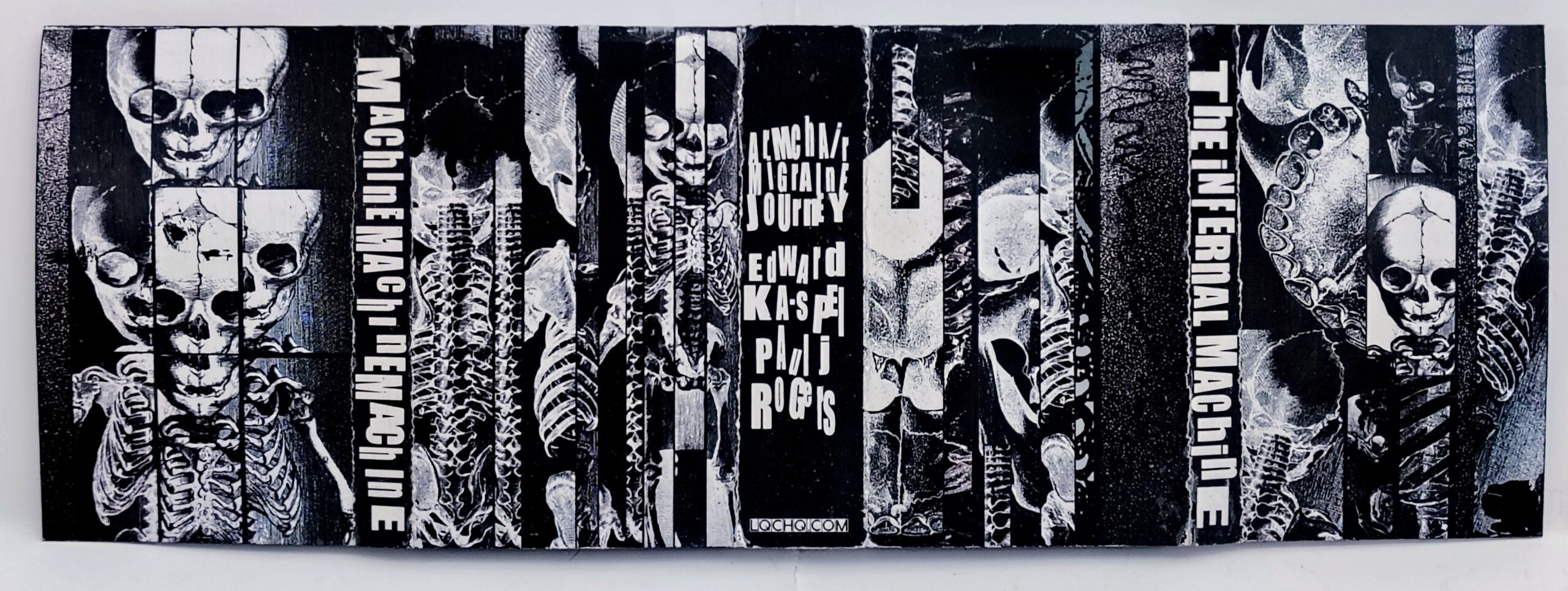
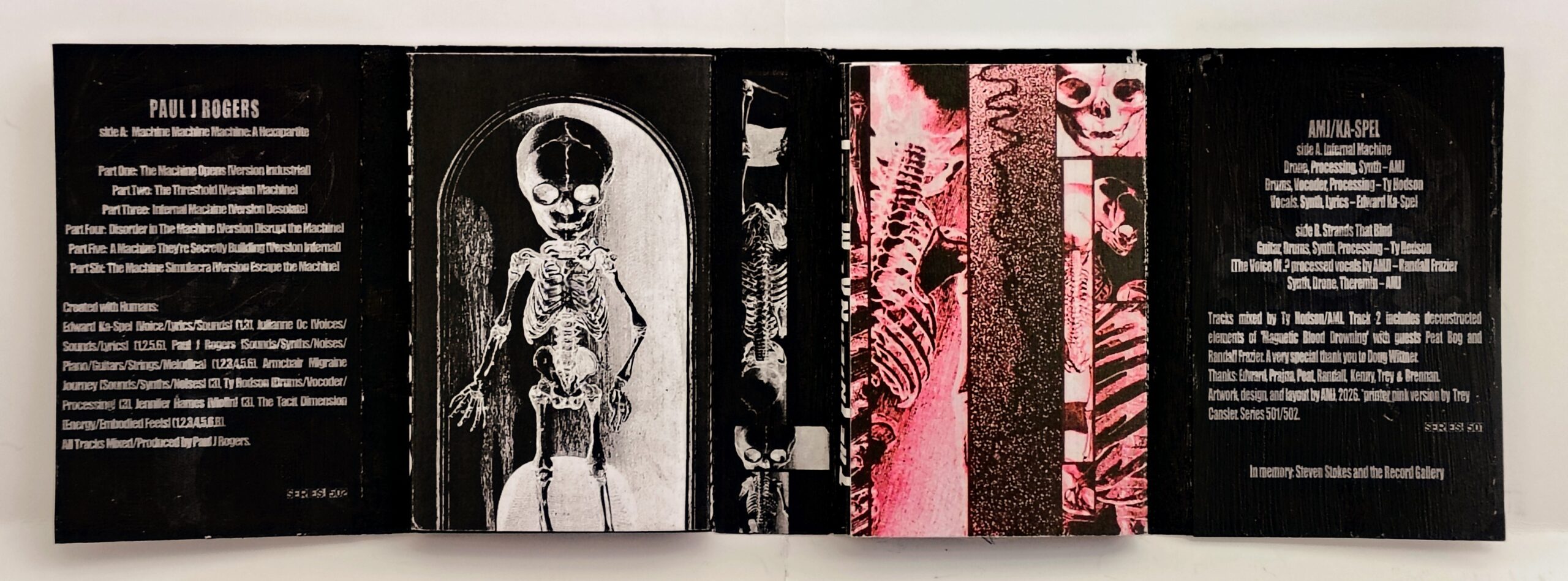
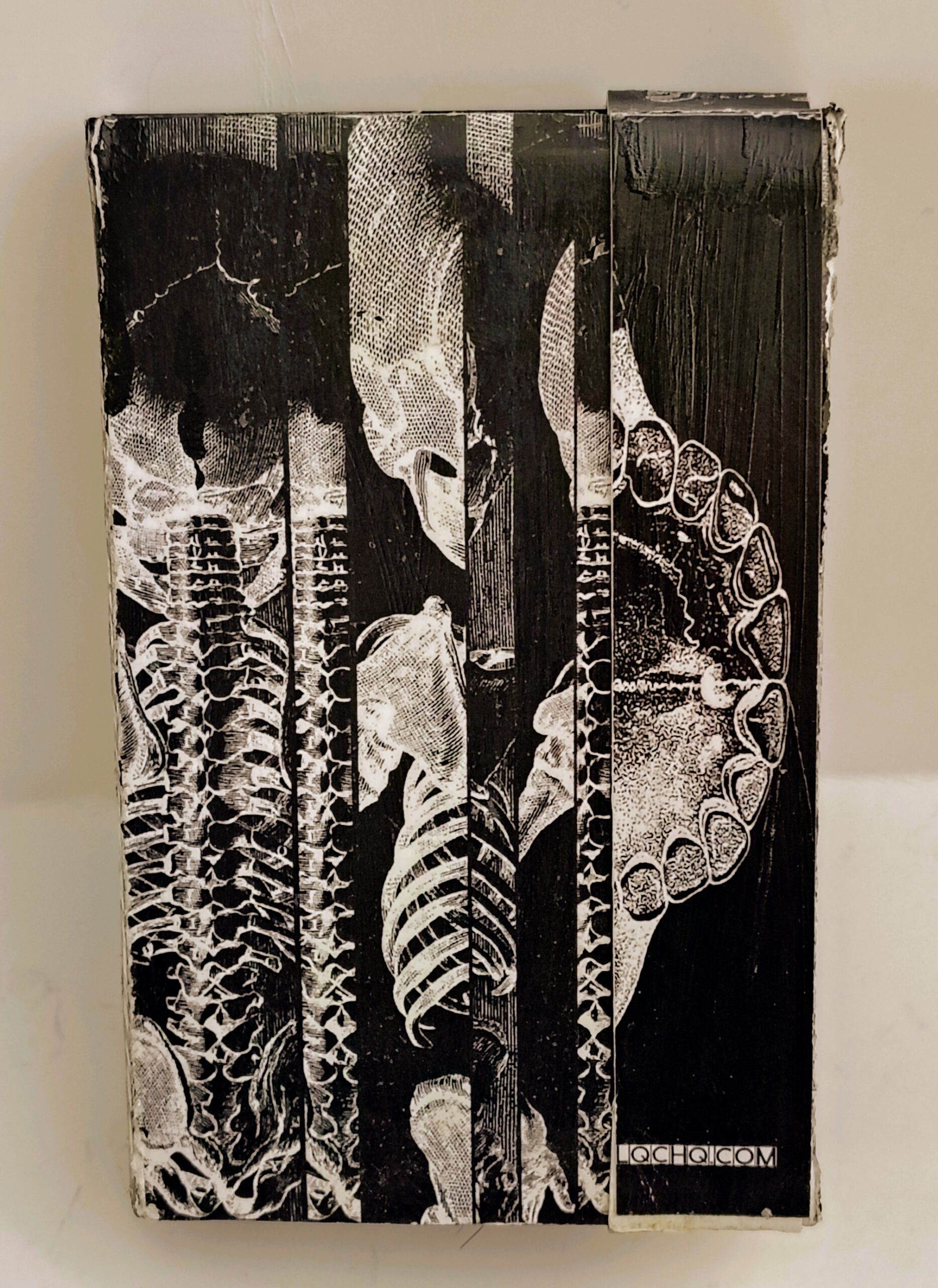
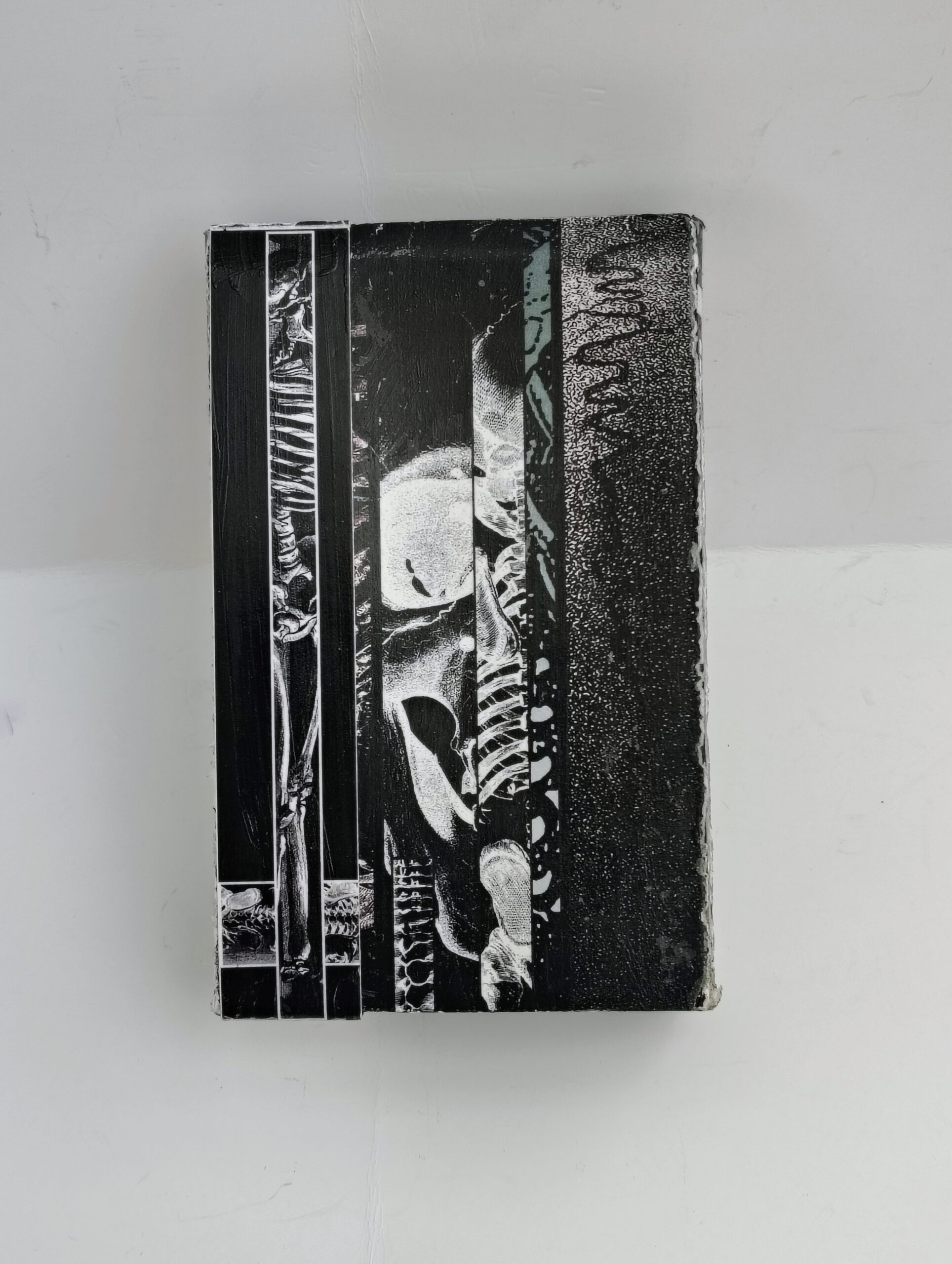
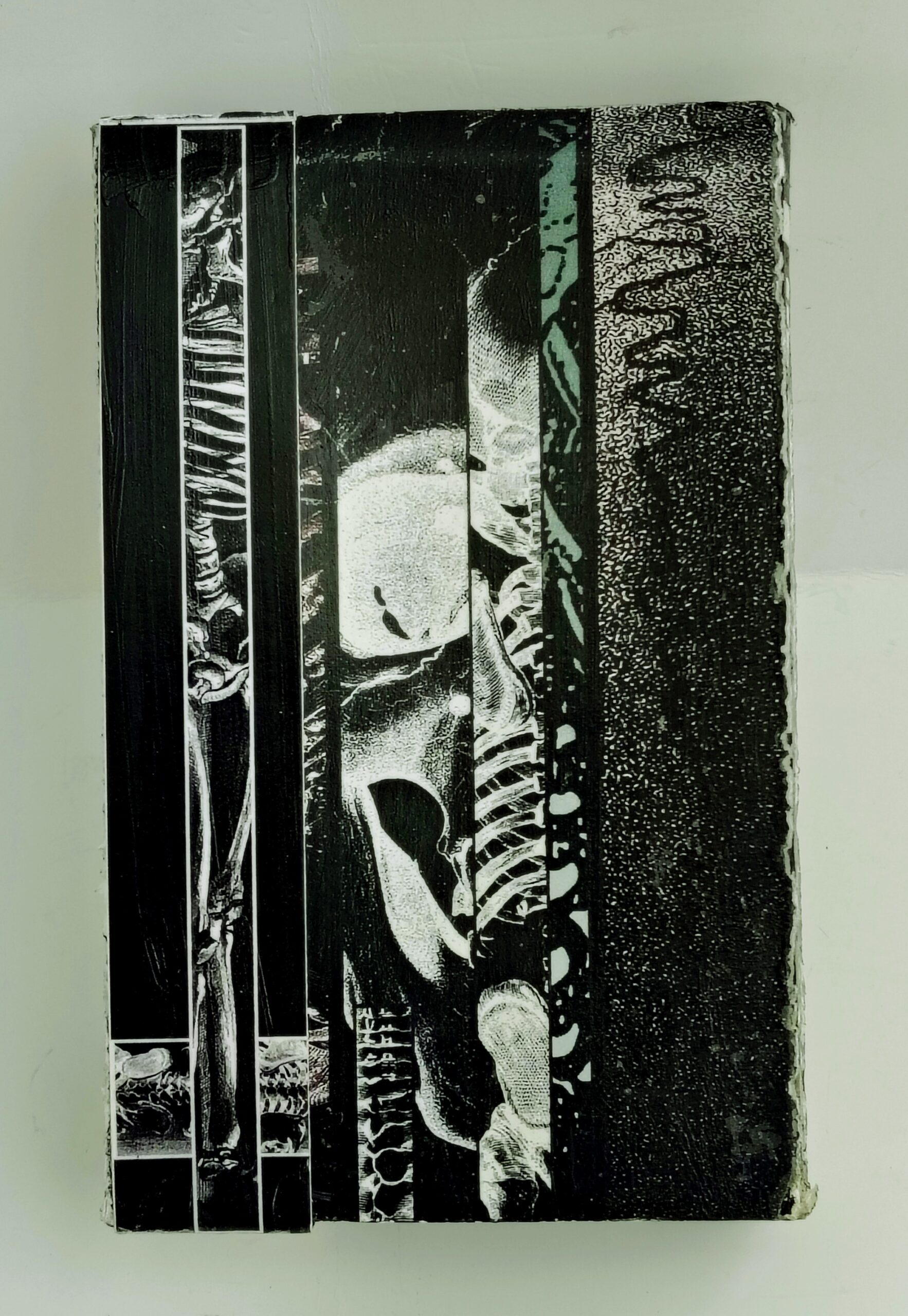
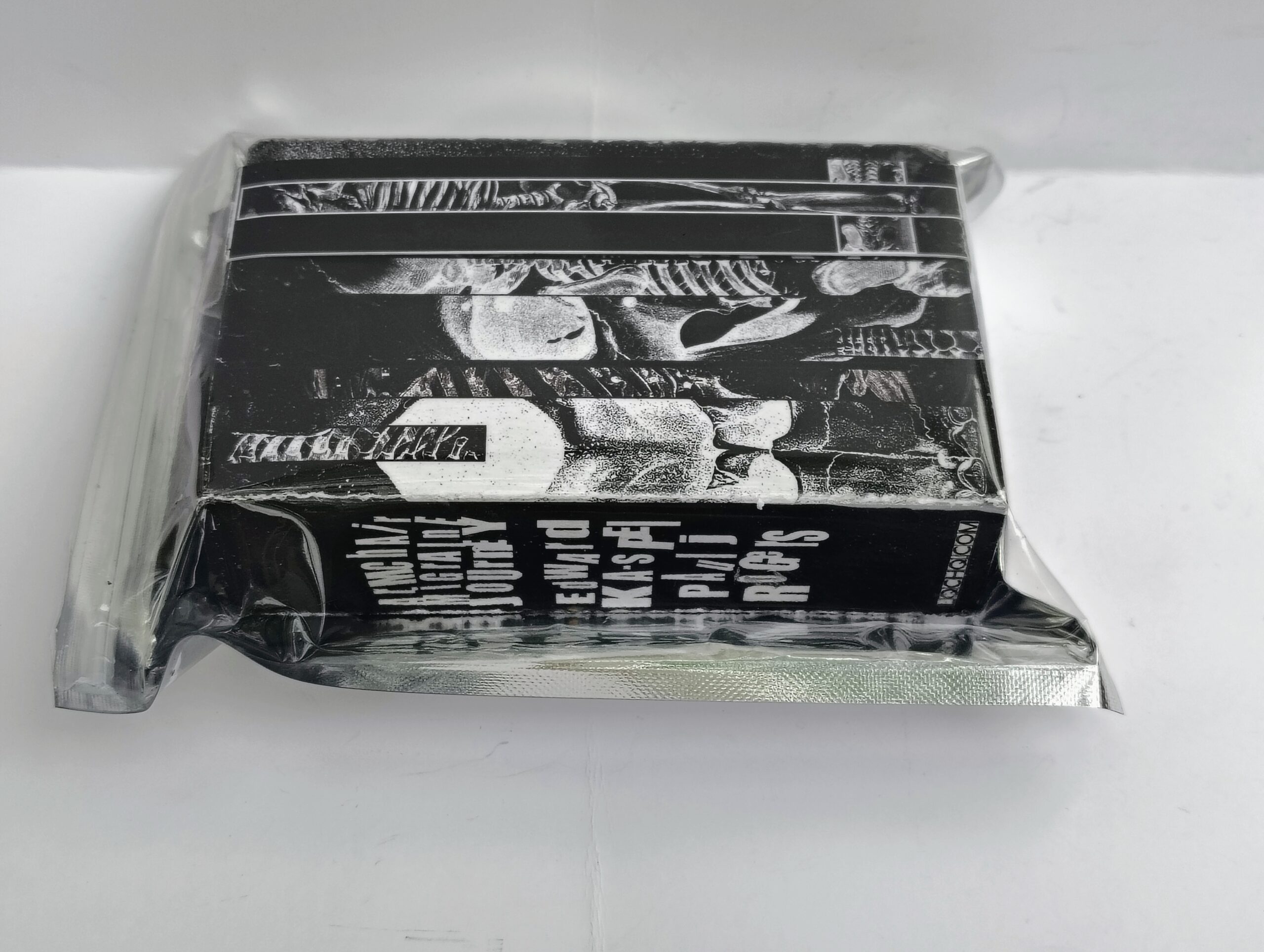
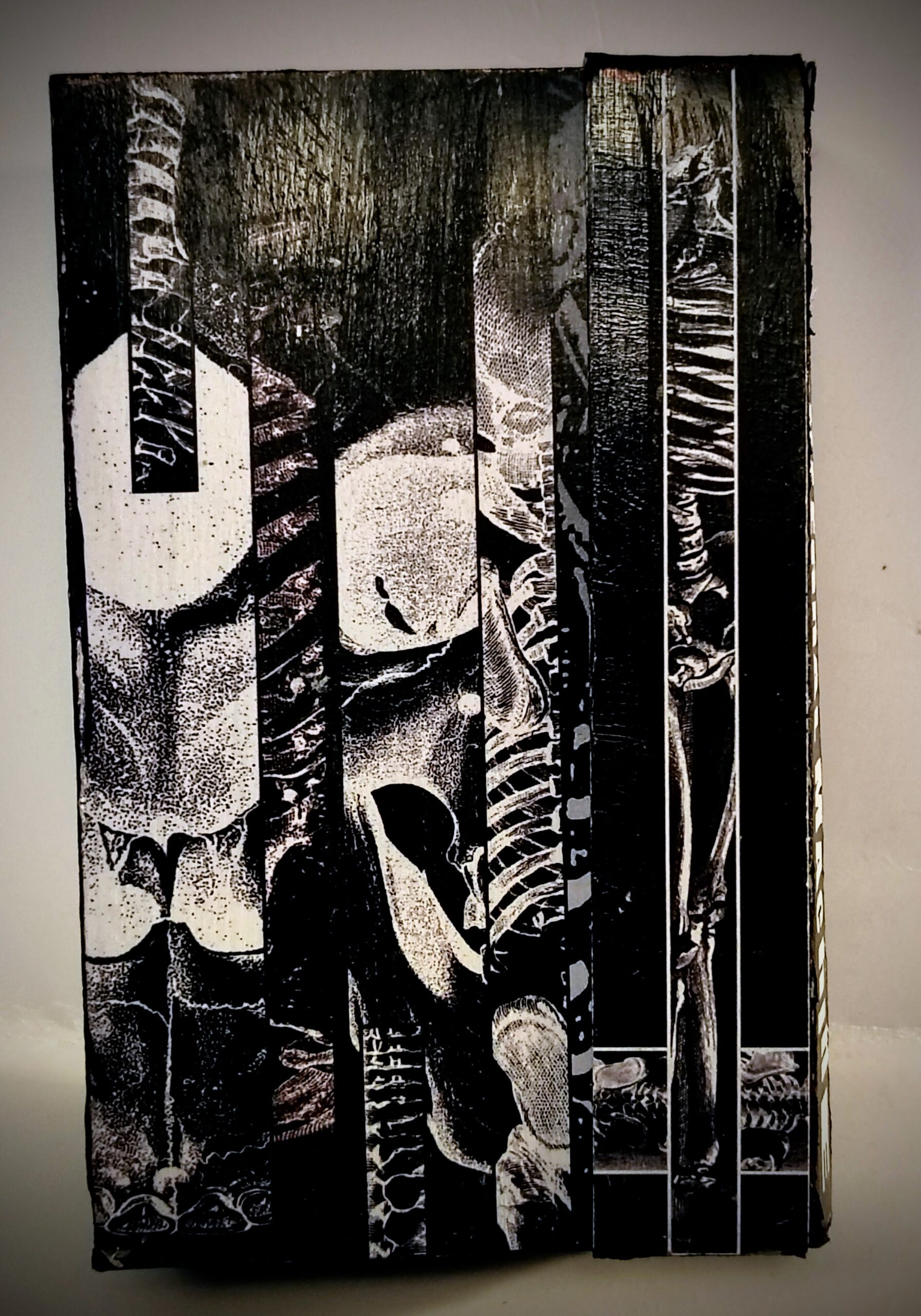
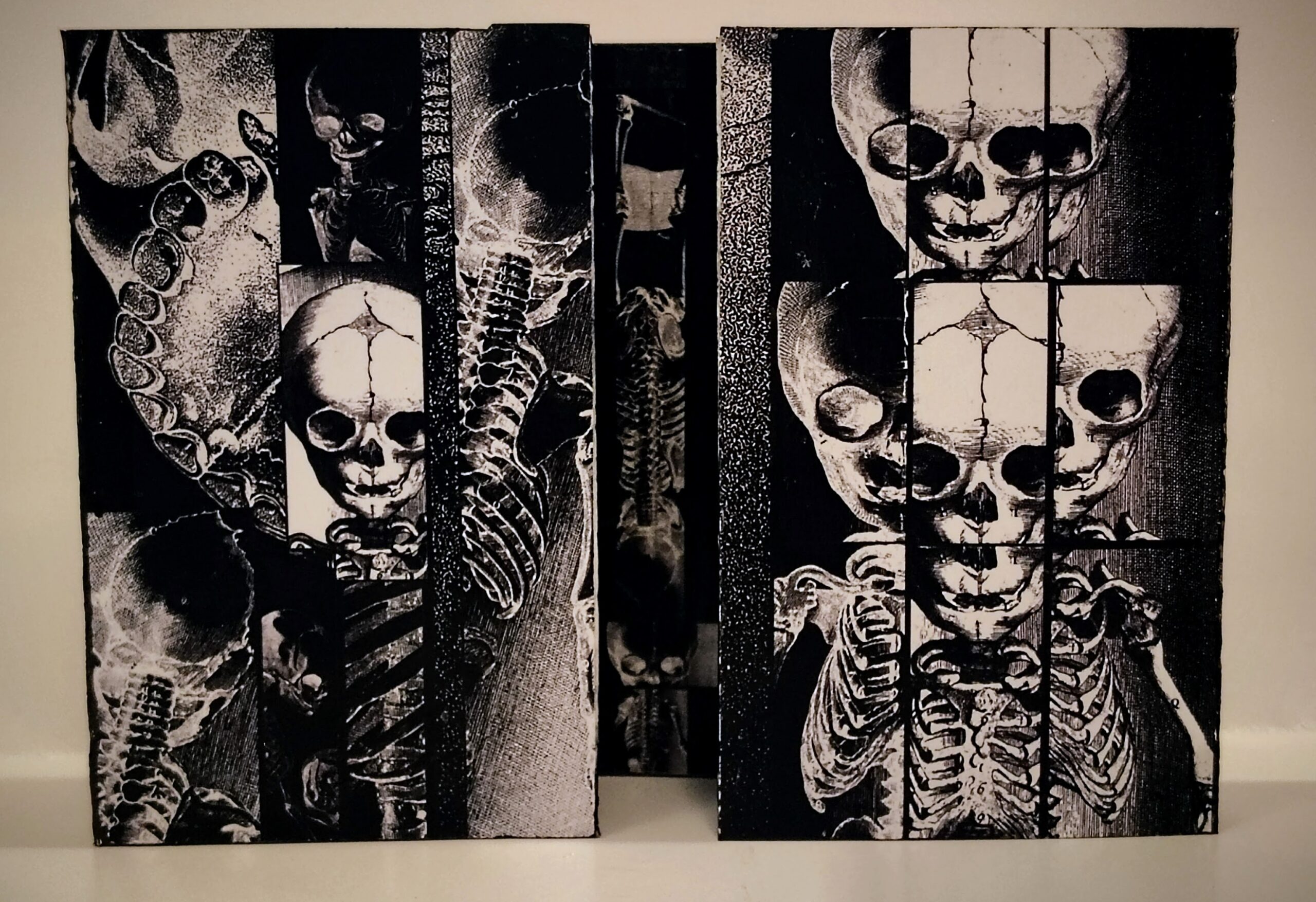
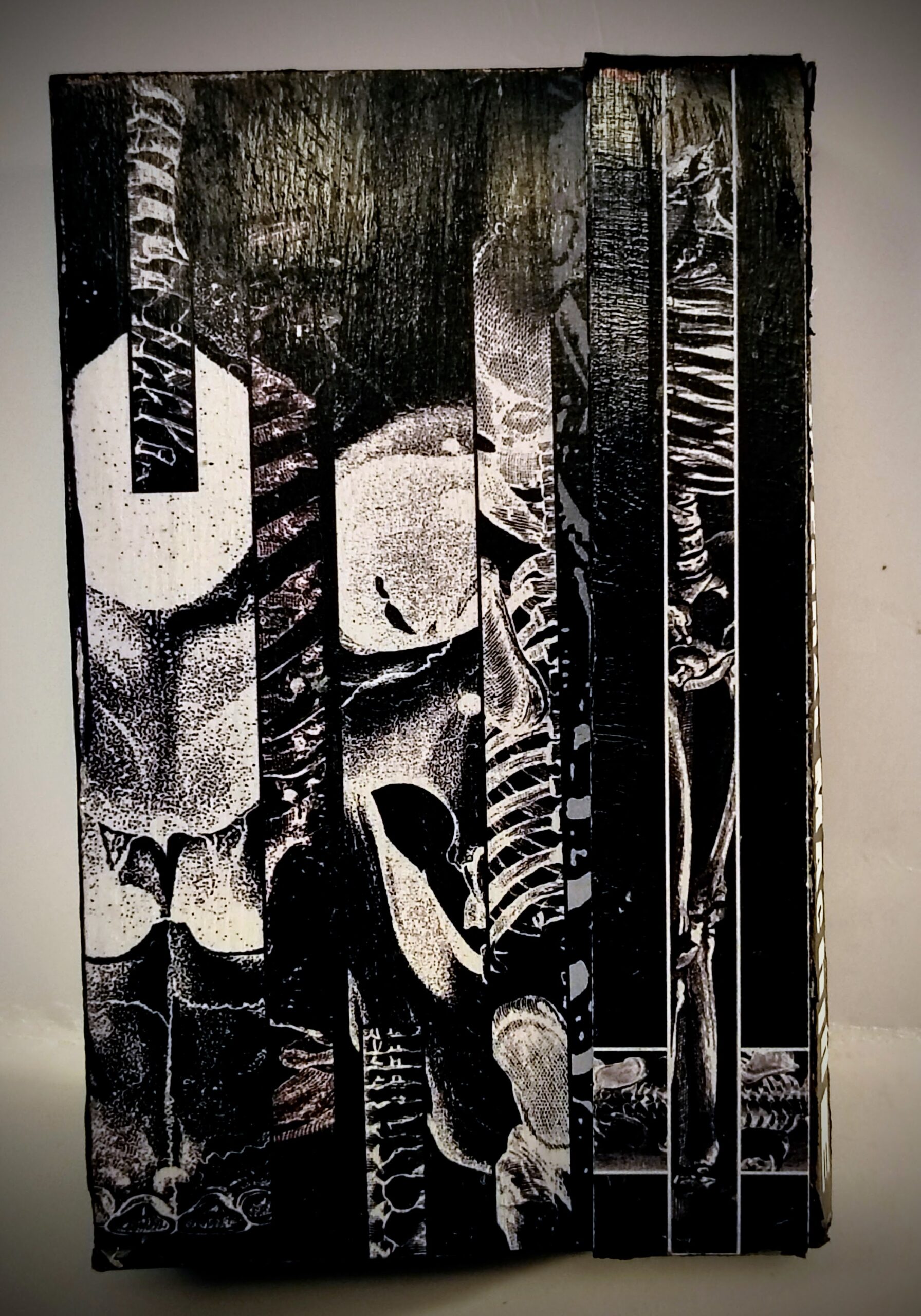
2 × tape* edition of 125 numbered copies: Hand-printed/assembled/glued/painted multi-panel gatefold sleeve with outward-folding side flaps, complete with two inserts, ‘Obi-strip’, and housed in a black/holographic mylar resealable outer sleeve. *FerroMaster C756 — Type II cobalt high-bias audiophile tape, white imprint with black shell cases.
Series 501:
“On The Infernal Machine, Armchair Migraine Journey brings together heavy modular electronics, space rock, and progressive experimentation. Side A features the title track, a slow-burning, Krautrock-inspired piece with maestro Edward Ka-Spel. On Side B, “Strands That Bind” marks the final part in the Blood Coupling Magnet trilogy sessions with a heavier, more progressive sound, built around dense layers of noise, acoustic tension, deep drifting drones, and pounding drums. Both sides push into challenging territory without losing their sense of movement.”
Series 502:
“Machine Machine Machine: A Hexapartite by Paul J Rogers takes Infernal Machine as a prompt and morphs it into a 30-minute otherworldly journey of voices, violins, piano, and whispers, with Krautrock-like rhythms creeping in and out… true 29-minute imaginary soundtrack territory.”
PAUL J ROGERS
Side A: MachineMachineMachine: A Hexapartite (29:34)
Part One: The Machine Opens [Version Industrial]
Part Two: The Threshold [Version Machine]
Part Three: Infernal Machine [Version Desolate]
Part Four: Disorder in The Machine [Version Disrupt the Machine]
Part Five: A Machine They’re Secretly Building [Version Infernal]
Part Six: The Machine Simulacra [Version Escape the Machine]
Side B: Blank / reserved for naturenaturenature artifact tape boxset forthcoming.
Created with Humans: Edward Ka-Spel [Voice/Lyrics/Sounds] (1, 3), Julianne Oc [Voices/Sounds/Lyrics] (1, 2, 5, 6), Paul J Rogers [Sounds/Synths/Noises/Piano/Guitars/Strings/Melodica] (1, 2, 3, 4, 5, 6), Armchair Migraine Journey [Sounds/Synths/Noises] (3), Ty Hodson [Drums/Vocoder/Processing] (3), Jennifer Hames [Violin] (3), The Tacit Dimension [Energy/Embodied Feels] (1, 2, 3, 4, 5, 6, B). All tracks mixed/produced by Paul J Rogers.
AMJ / KA-SPEL:
Side A: Infernal Machine (18:66)
(Drone, Processing, Synth) – AMJ, (Drums, Vocoder, Processing) – Ty Hodson, (Vocals, Synth, Lyrics) – Edward Ka-Spel
Side B: Strands that Bind (26:66)
(Guitar, Drums, Synth, Processing) – Ty Hodson ([The Voice Of .? processed vocals by AMJ]) – Randall Frazier
(Synth, Drone, Theremin) – AMJ. Tracks mixed by Ty Hodson/AMJ. Track 2 includes deconstructed elements of Magnetic Blood Drowning with guests Peat Bog and Randall Frazier.
+Infernal Machine / Strands that Bind were issued in an edition of 150 copies on CD in 2016 on Beta-lactam Ring Records.
Paul J Rogers:
I originally worked some ideas into the Infernal Machine stems because it seemed to fit with a long-standing concept I’d had lodged in my head for many years and wanted to bring to life. I’d had this idea circling around my thoughts of a suite called MachineMachineMachine and an antidote, NatureNatureNature, for years, in fact I first started putting together this idea in the early 1990’s and somewhere in my archives is a tape of a track from this time called Machine Machine Machine that has a nine minute live version of the first movement I wrote for it, which was in a time signature of 13/8 if I remember correctly. This was an abandoned starting point for the concept which never saw the light of day beyond that.
MachineMachineMachine: A Hexapartite and its sister suite NatureNatureNature are two interlocking half-hour works of experimental sound sculpture, each the mirror and the answer to the other. Together they stage a long, strange argument between the mechanical and the organic: the rise, domination and eventual hollowing-out of the machine on one side, and on the other, the flesh, the soil and mother earth reasserting themselves. The question this leaves hanging is whether nature really survives, or whether it has simply been absorbed into the thing it was meant to outlast.
This idea has partly been inspired by one of my favourite books – Humphrey Jennings’ Pandaemonium: The Coming of the Machine as Seen by Contemporary Observers, a book that assembles first-hand witnesses to the Industrial Revolution and the original rise of the machine. That method echoes through the suites. Rather than telling a linear story, they collect fragments, voices, noises and impressions, letting the listener experience the machine’s arrival the way Jennings’ witnesses did: as wonder, dread, seduction and loss, all at once. The recent exponential changes in our experiences of the new machines brings Pandaemonium into full contemporary relevance.
Some further thoughts on the concept:
MachineMachineMachine: the rise
Six parts trace the machine from opening to escape: The Machine Opens, The Threshold, Infernal Machine, Disorder in The Machine, A Machine They’re Secretly Building, and The Machine Simulacra. Each carries a subtitle (“Version Industrial”, “Version Machine”, “Version Desolate”, “Version Disrupt the Machine”, “Version Infernal”, “Version Escape the Machine”) as the same engine is being heard through different states: running, breaking, hiding, fleeing.
Sonically, this is the realm of the mechanical and the hypnotic: repetition, drone, pulse, noise and psychedelic transformation. Lyrically, it explores human/machine interaction, alienation, and the rise of the simulacrum, the copy that gradually replaces the real. Infernal Machine conjures a world of intricacy, where even peace is tangled in cables. The Machine Simulacra sets a childhood-summer elegy, all sand, grass, wheat and golden hours, against the flat, screen-lit comfort of the bedroom, where wishes are pointed at a window but dreams stay inside the head. Yet it closes on a hint of autumn and the possibility of change, of freedom
NatureNatureNature: the return
Four parts, inspired with the vocabulary of biological states: Haplotype, Phenotype, Genotype and Prototype. Here the machine’s logic is not defeated so much as metabolised. The suite is a luxuriant, hallucinatory garden of earthly and unearthly delights, built from drifting atmospheres, curious noises and organic alchemy, with the birds, bees and beasts of Warwickshire whispering into the comings and goings of the machine. Evolution takes an unexpected turn; the boundaries between biological, artificial, machine and human grow porous.
The two monologues are the emotional core of the ideas. A phenotype perspective experiences the alienation of life and the living but keeps hangs on to belonging, the flesh is the centre – A discarded, apologetic, strangely dignified prototype pleads for remembrance, It invites us to consider the forgotten prophets, the superseded models, even books as mere prototypes, before finally offering the line that flips the power dynamic: Ask me anything… I’ll do my best.
The machine rises and dominates. Nature takes back control. But the final voice is neither clearly organic nor clearly artificial. If nature survives, it may survive as something engineered, and if the machine falls, it falls as something that felt, or learned to say it did? Survivor or simulacrum? The suites deliberately create ambiguity.
When AMJ and Edward first sent me the stems of Infernal Machine it just sounded like it could belong as one of these movements I’d envisioned in my suite and so I sculpted it into how I had imagined it. I also worked and created parts with violinist Jenny on this version who added her creative compositional flair to the piece. This was the next stage in manifesting the idea around 10 years ago, but then that too lay dormant in the dark corners of the ideas machine and it wasn’t until a decade later when AMJ posited the idea of bringing it back to life.
This sparked the motivation to finally realise the full idea of a suite of pieces on this theme that had been building in my thoughts for close to 30 years! I set about reworking Infernal Machine and then building the complete Hexapartite around it. I had some sections from pieces I had developed over interim years that I knew could form part of the whole as I’d built this concept into them previously. The full suite was constructed with new and old materials, some lying around like broken or unused bits of machinery and some providing cogs in other machines. I worked with Julianne Oc on some new sections, who provided the beautiful voices and words and creative excellence that just interacted perfectly and helped to create context. Finally, after 30 years this suite I’d heard in my head was made real with the input of all these incredible collaborators. Next came Nature Nature Nature. I brought field recordings collected in my hometown of Warwickshire and interweaved the ideas and the aural experiments into shapes that could be developed. Edward worked on a section and Julianne on another, with Armchair Migraine Journey adding atmosphere and sound for another…… eventually the sister suite emerged and the 30 year concept finally sprung to life at the right point in history, just as the intelligence fully takes hold of the machine, but the flesh fights back.